Balancing Safety and Privacy: How AI-Powered Facial Blurring Supports Modern Transit
A journey changes.
The lighting environment should, too.
A rail journey is not a single, unchanging experience. Passengers board, settle in, work, read, dine, move through the train, relax and, on longer routes, sleep. The purpose of the space changes with them. Yet train interior lighting system often remains fixed, delivering nearly the same visual environment whether it is early morning, midday or late evening.
Rail Mood Lighting by Luminator is a concept for a more responsive approach to adaptive interior lighting for rail cars. It brings together mass transit lighting, indirect and ambient light, configurable scenes and software-controlled lighting to help shape the interior around the rhythm of the journey. Instead of presenting lighting as a collection of separate fixtures, Rail Mood Lighting by Luminator considers the complete passenger environment, including ceiling and wall accents—such as mirrors, reading lights, floor and under-seat wayfinding, and the control interface that coordinates them.
For passengers, the value is a more intuitive and comfortable journey.
For operators, the same connected lighting environment can support passenger flow, clearer wayfinding and better visibility into the condition and useful life of lighting assets.
Rail Mood Lighting by Luminator is more than colored lighting: it is a coordinated approach to light, atmosphere, movement and resource optimization across premium, standard and high-capacity commuter rail cars.
From mass transit lighting to passenger experience.
Traditional mass transit lighting has an essential functional purpose: illuminate the vehicle, support visibility and help passengers move through the space. Rail Mood Lighting builds upon that requirement by asking how rail interior lighting can also make the environment feel more intentional.
A bright, balanced welcome scene can help passengers understand the cabin as they board. Cooler or more neutral tones can support daytime activity. Teal, blue and aqua can create visual continuity across a shared coach. Violet, coral, pink and amber accents can support evening transitions, dining and relaxation without limiting the experience to white light alone.
The goal is not a theatrical color show. It is coordinated mood lighting that supports the purpose of the space. Atmospheres proposes a broader color palette, controlled intensity and layered light to help create environments that are clear, comfortable and appropriate to the moment.
One interior. Many experiences.
The clearest way to understand Rail Mood Lighting by Luminator is to imagine one train interior changing through the journey by using a software-controlled rail interior lighting system.
-
Welcome. Clear, inviting general illumination supports boarding, finding a seat and storing belongings.
-
Work. Balanced ambient light and focused task lighting create a useful environment for reading or using a laptop.
-
Dine. Warmer amber, coral and rose tones can give lounge and dining spaces a more social character.
-
Relax. Softer blue, violet and peach lighting can signal a transition from activity to rest.
-
Rest. Lower-intensity lighting can support overnight travel while preserving appropriate orientation and movement through the car.
-
Service. Operators and crews can select brighter functional settings for cleaning, inspection or other service activities.
These are not separate interiors or isolated products. They are coordinated scenes that allow one environment to serve different passenger and operating needs.
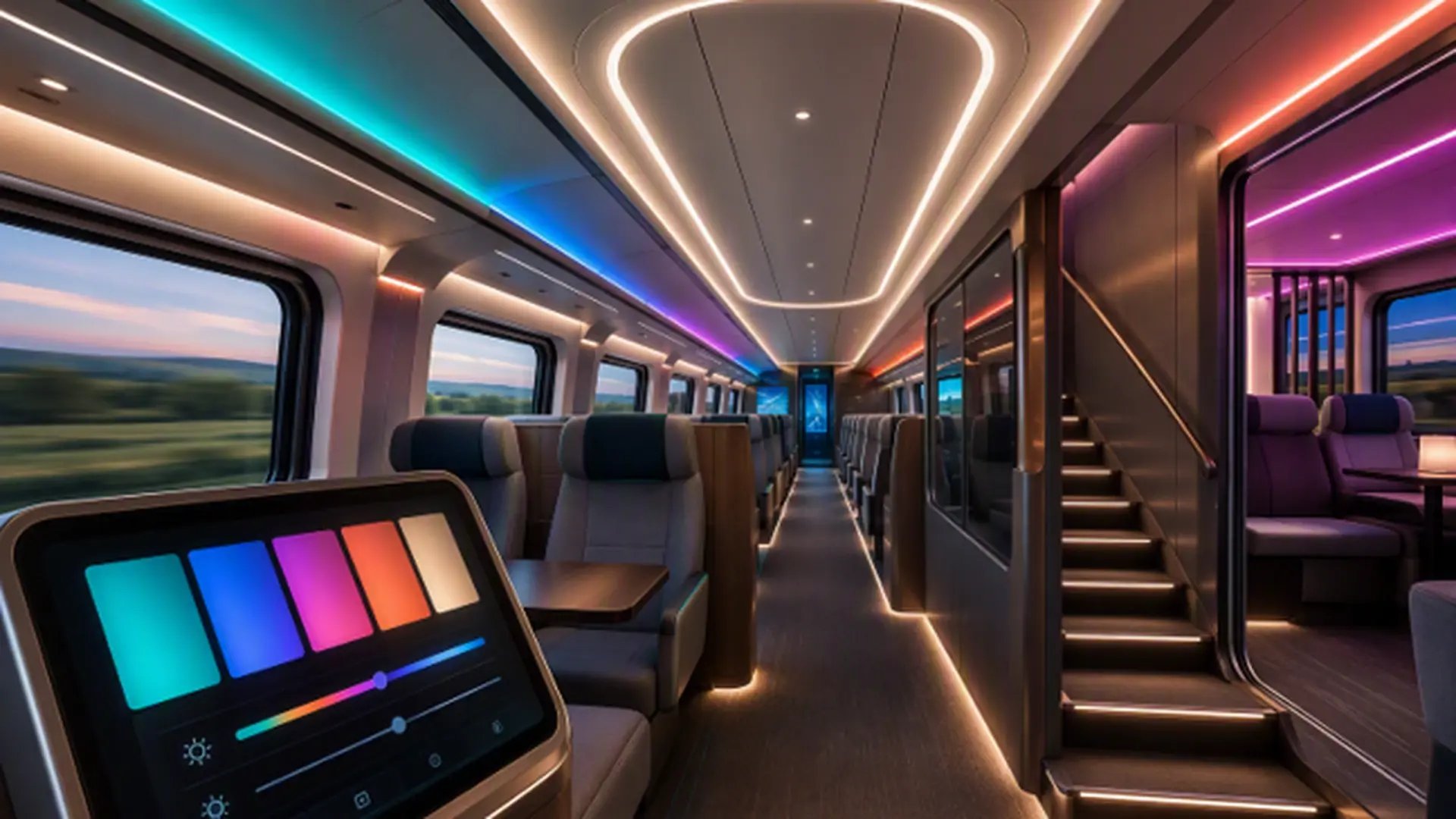 Coordinating the rail lighting environment and directing passengers across the journey.
A visible, intuitive control experience.
The control interface is an important part of the atmosphere story. A clear panel can make lighting choices tangible by presenting a managed set of scenes, colors and intensity levels. In a shared coach, the operator can maintain a consistent carriage environment. In a private compartment or premium area, suitable local controls may allow a passenger to select from approved settings.
This balance matters. Unlimited personalization could create visual inconsistency or affect nearby passengers. A curated control experience gives passengers and crews understandable choices while maintaining the overall design intent. It also helps mood lighting become part of the onboard environment rather than an isolated decorative feature.
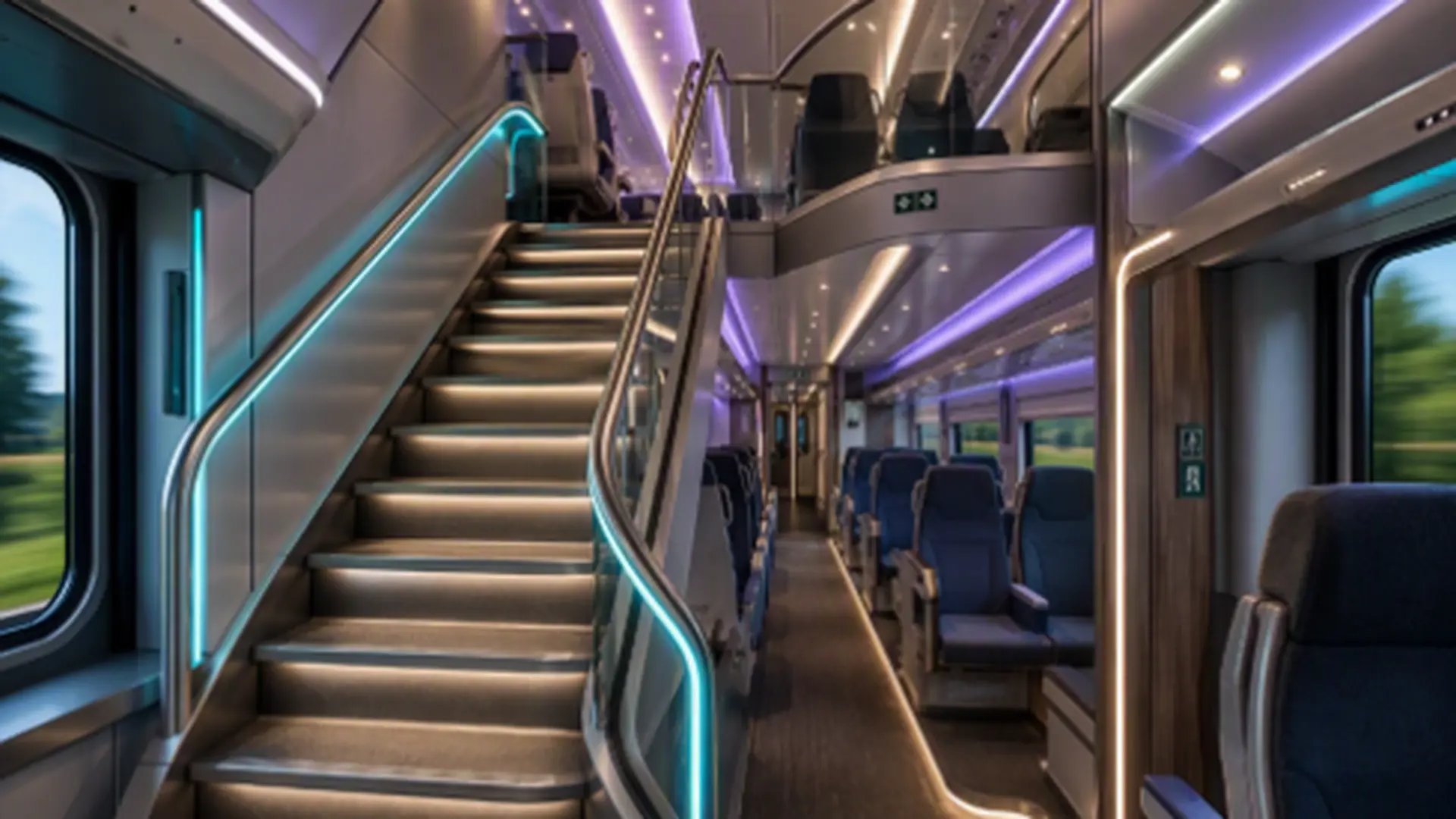 Integrated step and handrail lighting makes stairs and level changes easier to see.
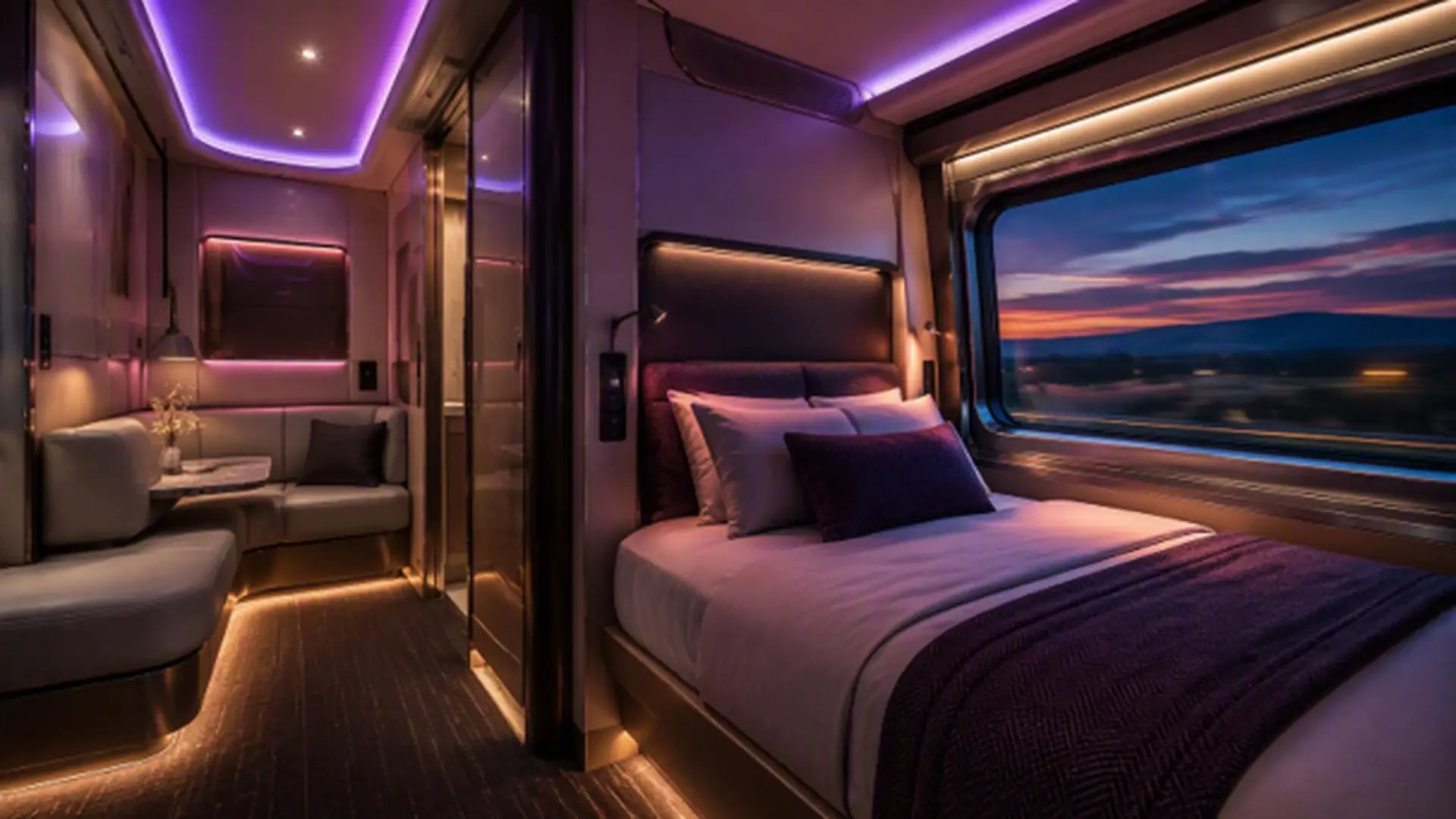 A sleeping car uses personalized controls to create a calmer transition toward rest.
Passenger experience and operator value.
Rail Mood Lighting is intended to create value on both sides of the journey. Passengers benefit from a clearer, more responsive environment, while operators gain a framework for using connected lighting to support movement, service and asset decisions. The concept is relevant not only to high-end dining, lounge or sleeping cars, but also to standard intercity and commuter cars that move large numbers of people.
-
Guiding passenger movement. People naturally tend to move toward brighter areas. Coordinated lighting may help direct passengers toward exit doors and support more even movement through cars, with the potential to reduce boarding and alighting dwell time.
-
Supporting evacuation procedures. Defined emergency lighting scenes can reinforce exit routes and help make changes in direction, stairs and doors easier to identify. Any use would need to align with applicable rail safety, illumination and approval requirements.
-
Extending the useful life of lighting assets. Managed color temperature and output may help operators compensate for aging light sources and maintain a more consistent environment over time.
-
Improving maintenance visibility. A connected lighting system can provide a foundation for status information, including which lights are working, where quality is changing and when a fixture may be approaching the end of its useful life.
-
Connecting the train and platform experience. On a larger scale, coordinated lighting could extend beyond the vehicle to platforms, helping guide passengers as they enter and leave the train and supporting more orderly movement at busy stops.
The broader opportunity is operational as well as visual: use lighting as an active part of passenger flow, safety support and resource optimization, while improving the experience across every class of train service.
Integrated by design.
Rail Mood Lighting is more than a palette of colors that create an atmosphere. The concept is built around software-controlled lighting that can work as part of the broader onboard environment. Scenes can be aligned to operating context, time of day and passenger-space type. Direct, indirect, task and wayfinding light can be coordinated rather than managed as unrelated elements.
This integrated approach also creates a foundation for greater visibility into lighting-system status. When lighting is connected to the train’s control environment, operators can move beyond basic switching toward coordinated operation and condition awareness.
Safety, function and atmosphere belong in one system conversation.
Comfort cannot come at the expense of safe operation. Rail Mood Lighting must work within applicable illumination, visibility, emergency and approval requirements. General lighting, wayfinding, cleaning and emergency-related modes have distinct purposes. The concept is intended to coordinate passenger experience and operational needs, not place one ahead of the other.
Rail Mood Lighting by atmosphere is better understood as an integrated mass transit lighting system. The same system can address comfort, orientation, service and defined operating conditions while giving operators more tools to shape the onboard experience.
More than 40 years of Aerospace lighting expertise
Luminator is bringing together rail-system knowledge with more than 40 years of experience from its Aerospace lighting team. That experience includes engineered lighting for demanding transportation environments and practical knowledge of lighting fixtures, optical performance, dimensions, connectors, installation constraints and passenger-facing mood lighting.
Rail adds another layer: integration with onboard controls, passenger information architecture and operating modes. The Rail Mood Lighting concept brings these perspectives together. It combines transportation-lighting discipline with the use of software and controls to make rail interiors more responsive.
This is not about duplicating an aircraft cabin. Trains have different spaces, passenger movement patterns, journey lengths and operating requirements. It is about applying proven mood lighting expertise and a wider transportation perspective to the distinct opportunities of passenger rail and mass transit lighting.
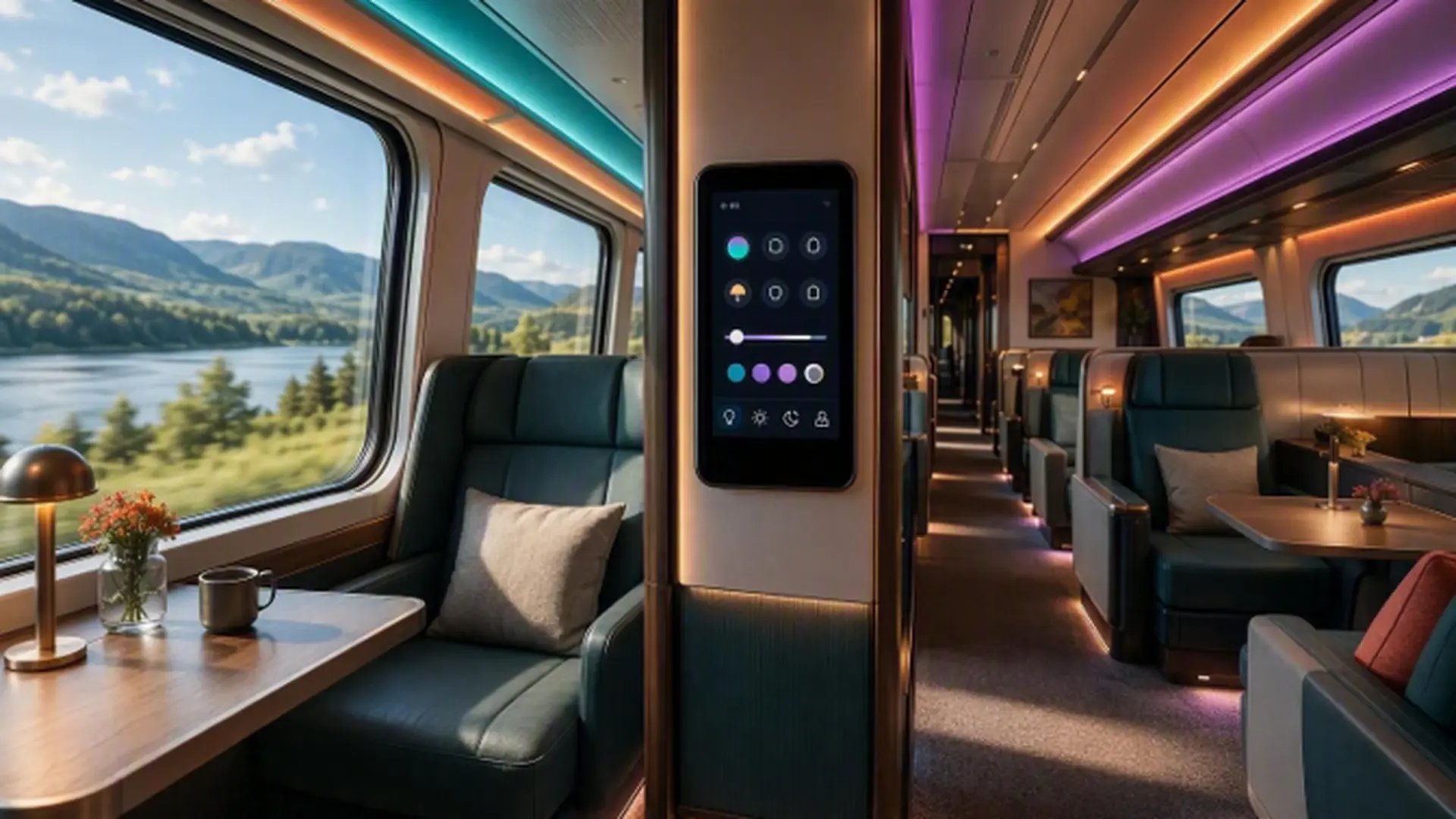 Aerospace mood lighting expertise informs the Rail Mood Lighting atmospheres approach to engineered, responsive transportation interiors.
See the journey in a new light.
Rail is increasingly expected to deliver more than transportation between two points. Especially on longer journeys, the interior becomes a place to work, connect, recharge and rest. Lighting is one of the most immediate ways to make that environment feel intentional.
Our concept brings the opportunity into one clear idea: Rail Mood Lighting that responds to the journey. By combining adaptive interior lighting, integrated controls, a broader color palette and more than 40 years of lighting expertise, Rail Mood Lighting can help operators, OEMs and designers explore a more responsive passenger environment and manage lighting assets across spaces to optimize system return on investment.